A Seder is a Jewish holiday meal at the beginning of Passover. It follows a 15-step order to retell the story of the Israelites’ escape from slavery in Egypt as told in the Book of Exodus and the Haggadah. The evening involves storytelling, ritual wine, and symbolic foods.
One of the goals of a Seder is to teach children about their history and discuss scripture. Often, families spend more time retelling the story from the Book of Exodus than eating the main meal.
Because the night is about memory, some parts of the Seder are not meant to be filling. The first half of the ceremony uses food to symbolize the hardships the Jewish people faced while enslaved. For example, participants eat maror, or bitter herbs, to represent the bitterness of slavery.
The Seder is, first and foremost, about the message. It uses food to show the story rather than just tell it. It is one thing to read scripture to a young child. It is a much more powerful lesson to connect those stories with foods that represent the struggle. This is an effective way to introduce children to their history. It also helps families discuss difficult topics, such as slavery, in a way kids can understand.
The storytelling and the meal both take a turn for the better as the Israelites reach freedom. This makes the lesson feel real and easy to follow. By the end of a Seder, everyone is feasting happily. This joyful part of the meal is just as traditional as the serious start.
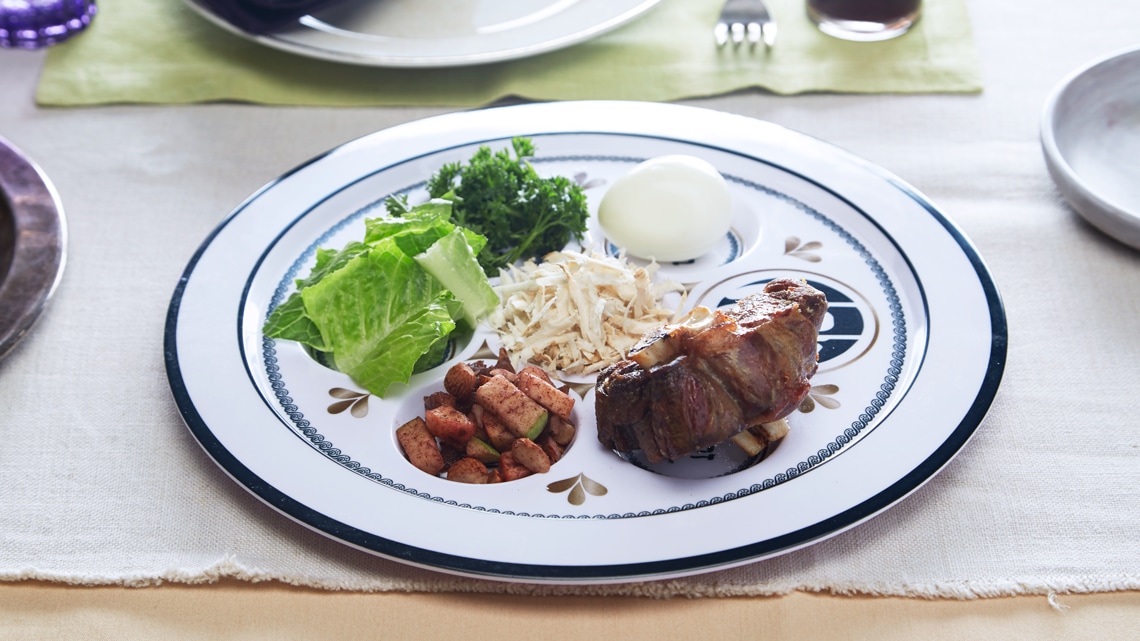
Every part of a Seder meal is full of meaning. Because of this, the rules for making a Seder plate are firmly established according to tradition. A Seder plate will always include maror, chazeret, charoset, karpas, zeroa, and beitzah. These are all formal names for the different items on the plate. However, most of them are as simple as slicing up some horseradish or boiling an egg.
The first step in arranging a Seder plate is the plate itself. Passover is one of the most important Jewish holidays of the year. Because of this, many families use their best dishes. If you have a special set of china that hides in a cupboard 11 months out of the year, now is the time to use it.
You will need a single serving dish large enough to fit six small bowls on it. Some families also provide a small Seder dish for each person. These bowls only need to be big enough to hold a handful of food for each person, but traditionally, a plate requires space for all six items. Seder plates made specifically for this holiday are a common sight. While they are not strictly necessary, many people find them important. They are easily available to buy.
Once you have a plate, there are six small “courses” to set on it. These are more symbolic than a full meal, so you only need a little for each guest. Each bowl receives one of the following six items:
In English, this means “bitter herbs.” The maror is usually represented by horseradish, but you can also use bitter lettuce. It should be uncooked, but you may cut it however you like.
Traditionally, this is a roasted lamb shank bone with no meat on it. Some families use a roast chicken wing or neck instead.
The beitzah is a roasted hard-boiled egg. It is one of the few items that requires some prep. To hard-boil an egg, bring a pot of water to boil and gently add the egg. Immediately turn off the heat, cover the pot, and let the egg sit for 10 to 12 minutes. Move the egg to an ice bath for five to 10 minutes before roasting.
The karpas can be any herb, but is usually a sprig of parsley or celery. During the Seder, you will also need a small bowl of salt water to dip the herb in.
Charoset is a mixture of wine, fruits, nuts, honey, and spices. The specific ingredients depend on local customs. The process is simple: Just dice all of the ingredients and mix them together. Many people recommend having a little extra charoset because it is a favorite food for many guests.
The chazeret is the second bitter herb. Most often, it is a few leaves of romaine lettuce. It should be included if you want to be as traditional as possible, but some families skip this bowl.
Besides arranging the Seder plate, you will need a few other ingredients to finish the ritual. First, you will need three pieces of matzah. You will also need two cups in the middle of the table. The first is Elijah’s Cup, which is filled with wine. You should make sure it looks different from the other cups on the table. The second is Miriam’s Cup—a more modern addition—which is filled with water.
During the ritual, you can only eat certain foods at specific times. Some of the food on the Seder plate will not be eaten at all. Most of the meal happens toward the end of the Seder. Along the way, you will drink four cups of wine (or grape juice for the children). The Seder happens at the start of Passover after a long day of holiday prep. Guests often reach the Seder already feeling hungry and eager to get through the (on average) two hours of discussing Scripture to get to dinner. It is a good idea to have a snack to tide you over earlier in the day before you begin, but be sure to avoid leavened bread, as it is against tradition to eat it during Passover.
The Seder involves 15 ritual steps, and only some of these steps include food. Throughout the night, you will eat most of the items on the Seder plate. Please note that this is not a full list of every ritual many Jewish families observe during a Seder. Depending on how traditional a family is, they may even have specific ways to eat certain foods, but each family will have their own standards. This guide focuses only on the food so you know what to expect from a Seder. If you’re looking for a guide to the full Seder ritual, there is no better teacher than your family or community.
At the very start of the Seder, you will bless and drink the first of four cups of wine.
Shortly after the kadeish, the karpas is dipped in salt water before being eaten.
The Maggid, or Telling, is where most of the storytelling occurs. This step is much longer than many of the others and includes a second glass of wine.
During this step, you will eat some (but not all) of the matzah. Matzah is used in specific ways throughout the Seder. It is broken into pieces and blessed. During Step 8, you will take a few bites from two of the three pieces of matzah.
During Step 9, you will dip some of the maror into the charoset and eat it. You only need to eat a mouthful to follow the ritual. If that is all you want, no one will blame you. They are called “bitter herbs” for a reason!
Finally, you will eat something more filling. Step 10 will have you making and eating “Hillel sandwiches” using many ingredients from the Seder plate. Using some of the remaining matzah, fill your sandwich with charoset and maror and enjoy.
After the Hillel sandwiches, it is time for the Passover feast to begin. Some families start the feast by dipping the beitzah in salt water and eating it. Others leave the egg on the Seder plate.
No matter which tradition you follow, the holiday feast itself is not found on the Seder plate. There are a number of other traditional dishes that are prepared separately, such as potato kugel and gefilte fish. In the earlier steps, you only have a bite or two of food. Now it is time for a full feast.
Step 12 is the final step involving food. After the feast, there is one last ritual. Everyone eats a piece of matzah that was set aside earlier for this purpose. Depending on your traditions, it may also be improper to eat any food after this point, so make sure everyone has had their fill before proceeding to this step.
During these two steps, you will have one more glass of wine each at specific moments.
Two of the ingredients on the Seder plate will not be eaten. The zeroa, the lamb shank, is a roasted bone. No one is asked to chew on a bone with no meat. Depending on how each household practices, the beitzah, the hard-boiled egg, sometimes goes untouched. However, it is still traditional to eat a hard-boiled egg to start the feast and many families prepare extra eggs to eat. Both ingredients represent sacrifices the Jewish people offered to God, thus they are not eaten during the meal and are there for ritual purposes.