

Ham is the most forgiving showstopper in your holiday repertoire—it’s already seasoned, already cured, and practically impossible to ruin. Here’s everything you need to know to cook ham perfectly, plus a simple sweet mustard glaze recipe that makes it unforgettable.
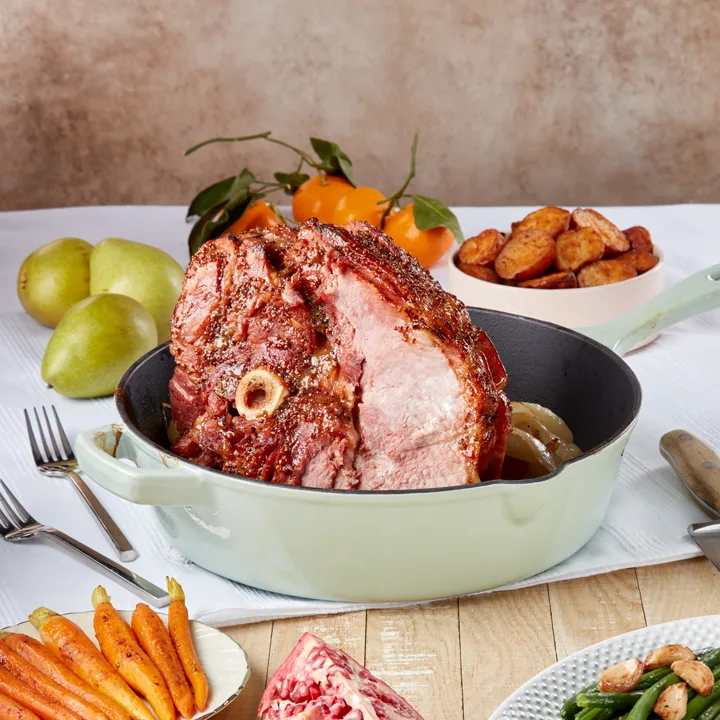
Baked ham is the classic centerpiece of holiday dinners—Easter and Christmas especially—and for good reason. Unlike other grand roasts, ham arrives at your door already brined, smoked, or cured, which means most of the hard work is already done. Learning how to cook ham is less about technique and more about understanding what you’re working with and how to finish it well.
Before you can cook ham, you have to buy the right one. The options at the butcher counter can feel overwhelming, but they really come down to three simple decisions.
More flavorful and moist during cooking. The bone also doubles as a base for soups and broths after the meal. Slightly trickier to carve.
Easy to slice and serve. Watch out for pressed boneless hams—made from smaller pieces—which can dry out faster and have a deli-meat texture.
Pro tip: For bone-in hams, plan on about ½ lb per person. For boneless, budget ⅓ lb per guest.
Pre-sliced into thin layers—ideal for glazing and serving as a centerpiece. More surface area means more caramelized glaze on every slice.
An unsliced whole leg you portion yourself. Better for chopping into dishes like pasta, quiche, or fried rice—and less prone to drying out.
Since most store-bought hams are fully cooked or cured, your primary goal when cooking ham isn’t to “cook” it in the traditional sense — it’s to gently reheat it while keeping it moist and adding flavor. The stovetop method below does exactly that.
Simmering ham in a covered Dutch oven with aromatics keeps it incredibly moist — far better than blasting it in a dry oven. Think of it as a gentle steam bath that brings the whole thing to a perfect, juicy temperature.
After simmering, a quick 8–10 minutes in a hot oven caramelizes the glaze into a sticky, lacquered crust. That two-step process—stovetop moisture, then oven finish—is the secret to a ham that looks dramatic and tastes even better.
What you’ll need:
2 medium onions, sliced thick
2 cups dry white wine
1 teaspoon black peppercorns
1 teaspoon whole allspice
4 cloves
1 teaspoon honey
One 6–8 lb ham
For the glaze:
3 tablespoons Dijon mustard
1/2 cup honey or brown sugar
What to do:
Arrange onion slices in a layer over the bottom of a large Dutch oven. Add white wine, peppercorns, allspice, cloves, and 1 teaspoon honey. Place the ham on top. Cover the pot and bring to a simmer on the stove. Let simmer until ham is completely warmed through and moist, about 30 minutes, basting every now and then. At this point, you can serve the ham as is with its cooking juices or add a sticky glaze and finish it in the oven
To glaze:
Preheat the oven to 400 F. Transfer the ham to a sheet pan. Mix together the Dijon mustard and honey or brown sugar. Stir in just enough ham basting liquid to create a loose paste. Brush the ham all over with the mixture, getting some in the crevices if using a spiral-cut ham. Transfer the pan to the oven and roast until glaze thickens and sets, 8–10 minutes, then serve.
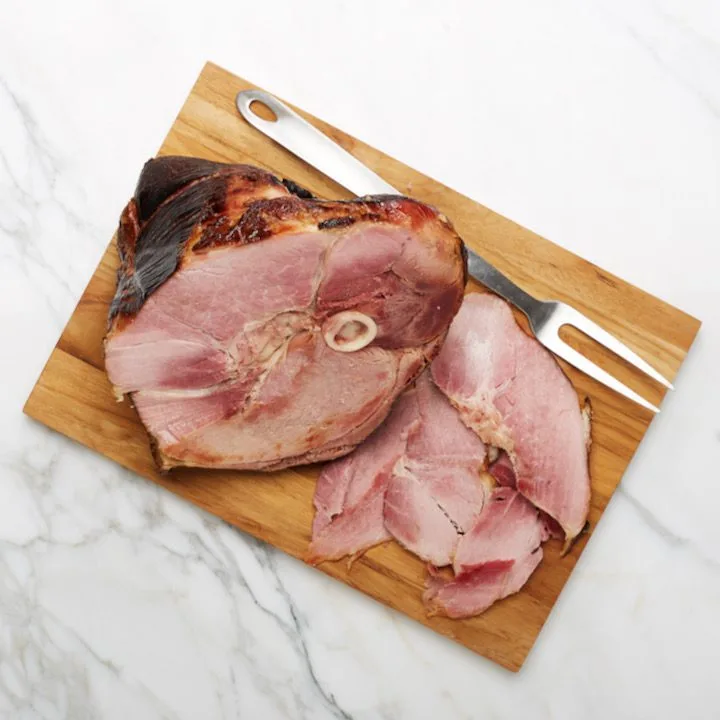
Once your ham has rested, carving depends on the style you chose. For a spiral-cut ham, the slices come apart naturally — just run a knife along the bone to free them. For a whole carving ham, slice perpendicular to the bone in even, thin cuts, then angle your knife along the bone to release them.
Pro tip: Leftover ham? Simmer the bone with water, onion, and herbs for an incredible stock. Use it as the base for split pea soup, white bean soup, or lentils.
Most store-bought hams are already fully cooked or cured. You’re simply reheating them to a safe internal temperature of 140 F while adding moisture and flavor. A raw, fresh ham needs to reach 145 F and takes significantly longer to cook.
The biggest enemy of a dry ham is high, dry heat. This stovetop method avoids that by keeping the ham covered in a steam-rich environment during most of its cooking time. Basting frequently also helps. If finishing in the oven, keep the glaze time short — 10 minutes is plenty.
Yes — a slow cooker is an excellent method. Place the ham cut-side down, add ½ cup of liquid (water, broth, or apple cider), and cook on low for 4–5 hours. Finish with a glaze under the broiler for 5 minutes.
Classic pairings include scalloped potatoes, roasted asparagus, honey-glazed carrots, or a simple green salad. The sweet-savory glaze also pairs beautifully with stone fruit — think roasted pears or a cranberry chutney.
Ready to get started? Order fresh ham and all the ingredients delivered to your door.