After she began picking and sharing these plants, chefs began calling. This coincided with the 2000's boom in hyper-local, foraging-focused restaurants inspired by Copenhagen's Noma. Suddenly, ingredients like nettle and maitake mushrooms were all the rage. New York fine dining establishments clamored to get her finds, including Daniel, Gramercy Tavern, Dirt Candy, and Blue Hill at Stone Barns. Selling directly to consumers had never been top of mind for her, but that changed when FreshDirect's founder met Tama at a conference.
"I didn't plan to work with FreshDirect because I was just picking for myself and for chefs," she explains. "I was at a TEDx Manhattan conference and the founder of FreshDirect was speaking at the same thing. He got inspired by how I was talking about picking weeds and how it was so good. He said 'I want that for FreshDirect.' So we worked out a way. I ended up getting a van and they helped with getting packaging connections. I wouldn't be doing this if FreshDirect hadn't supported me and helped show me the way. I'm not a food supply chain expert and I had no idea how to do anything!"
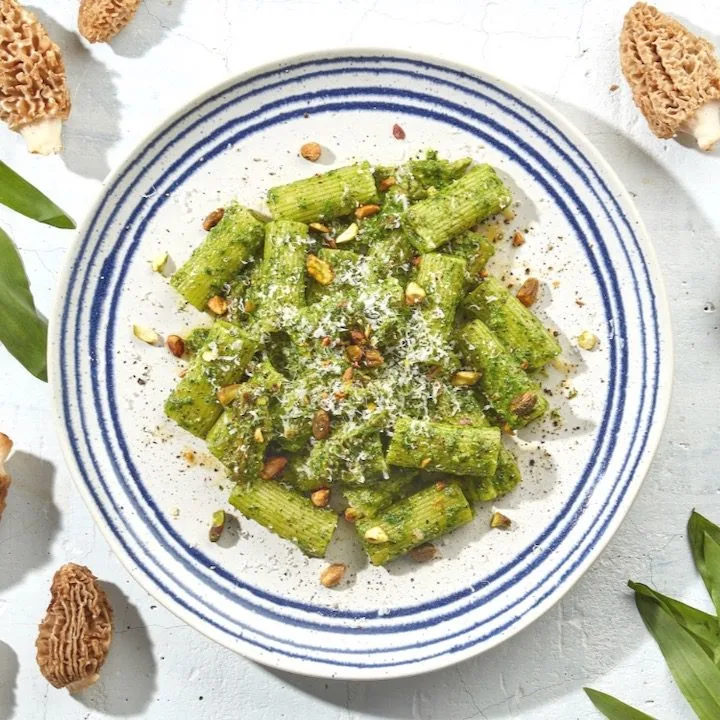
And so a one-of-a-kind relationship began, offering home cooks the opportunity to try ingredients that are rarely seen in stores. Tama's finds come and go from FreshDirect with the season: Fiddleheads, nettle, ramp leaves, and fresh bamboo shoots in spring; wild cranberries and maitakes in the fall.

Sharing these finds with a broader audience has an important purpose, according to Tama. "There's a lot of people who are interested in foraging, and there's a lot of people who are doing education about foraging... But I feel one of the best ways to actually get educated about something is to eat it. If you order something from FreshDirect and it has a recipe on it, you can see 'Do I like this?' and 'This is how it's supposed to taste.' And for people who live in an urban area who don't have access to clean, fresh land... it's kind of a gateway."
For anyone who works in foraging and native ingredients, Meadows and More serves as a model of stewardship and responsible sourcing. As Tama explained, "If someone is interested in starting foraging, the first thing is to think about where you want to forage. We are a permission-based company, which means that we own, lease, have contracts, or have permission every place that we go. That's really important because you know the history of the land... You want to make sure that you know the owners or at least the managers of that property so you know if instead of something really healthy, you have something that actually has toxins." This is an important first step, as plenty of places — especially around the New York City area — are recovering from the effects of pesticides, synthetic chemicals, and pollutants. Additionally, it is a reminder that foraging doesn't just start with a hike in the woods, but with conversations and an understanding of the best practices.


Since her first forays into the wild two decades ago, Tama has become an authority on working with foraged plants. Early on, in 2007, she was named Steward of the Year by the New Jersey Forest Service. Since then, she has published three books, Foraged Flavor, Scraps, Wilt & Weeds, and Into the Weeds, which are indispensable guides for anyone interested in the world of edible wild plants. She is frequently called upon for her expertise as a "meadow doctor" and as an advocate for making foraged plants a part of our food system. Her work emphasizes the greater good that can come from simply staying curious and engaged with your environment.
"Something that might seem very homely actually has hidden treasures."
Tama is still gleaning new teachings from the natural world and what it has to offer. "One of the most surprising things that I've learned from foraging is the kinds of flavors you can get from plants. Like if you took a branch, at first it doesn't seem like anything. But after you work with it, amazing flavors come out. Or there's a weed that if you dry it, it has an aroma of hay vanilla. You wouldn't think that if you just see it. I think I've learned a lot about how appearances can deceive. Something that might seem very homely actually has hidden treasures." It's a reminder of the magic that exists in our surroundings. That one doesn't need to search the world for new tastes and experiences. They already exist close to home.