Go for the whole bird! It’s super cost-efficient compared to buying by the cut. Here’s our simple method for roasting a chicken that proves your know-how as a home cook.

Head to any trending restaurant in New York City, and you’ll find a roasted whole chicken. There’s the roast chicken with herb jus and frites at Williamsburg’s Le Crocodile, Andrew Carmellini’s fire-roasted garlic chicken at Locanda Verde in Tribeca, and more that are the thing to order on so many chef-driven menus. There’s a reason roast chicken is everywhere. It’s not complicated. It’s not trendy. It’s just deeply, reliably good.
You can’t go wrong with it when eating out. But the truth is that as long as you have an oven, you can make a chicken that’s just as good. It’s a huge money saver, as whole chickens are always less expensive that individual parts, and you’ll have a protein that can last for days. Plus, there’s the satisfaction of showing of that beautifully crisped, golden bird and saying “yes, I did that.”

The single biggest factor in a great roast chicken isn’t technique. It’s the chicken itself. A high-quality bird roasts more evenly, develops better flavor, and gives you that golden, crackling skin that’s the whole point of the method. Here’s what to look for:
Organic. USDA Certified Organic chickens are raised on 100% organic feed, without antibiotics or synthetic hormones, and must have outdoor access. What this means for your roast: cleaner flavor, and the peace of mind that you know exactly what went into the bird before it came home with you.
Pasture-raised. This goes further than organic. Pasture-raised chickens spend the majority of their lives outdoors on open land, foraging naturally alongside their feed. The result is a noticeably richer, more complex flavor — and a firmer texture that holds up beautifully under high roasting heat.
Free-range. A step up from conventionally raised, free-range means the bird had access to the outdoors — though the quality and size of that access can vary. Look for free-range in combination with other certifiers (like Animal Welfare Approved) for a fuller picture.
Air-chilled. This one is a sleeper pick for roasting specifically. Most commercially processed chickens are cooled in a cold water bath, which adds retained water weight and makes for wetter skin. Air-chilled chickens are dried using cold circulating air instead — the skin comes out of the package noticeably drier, which translates directly to better browning and crispier results in the oven. If crispy skin is your goal, this label is worth seeking out.
Raised without antibiotics. Chickens raised without antibiotics are increasingly common and worth prioritizing. Beyond the broader public health reasons, many cooks find the flavor of these birds cleaner and more distinct (P.S. 100% of FreshDirect poultry is raised this way).
Heritage breed. Not always labeled prominently, but worth knowing. Heritage breeds are older genetic lines — think Black珠oster, Cornish Cross, or Freedom Ranger — that grow more slowly and develop deeper, more complex flavor than commodity birds. They’re the closest thing to what a roast chicken tasted like before industrial farming. A special occasion bird.
Heritage breed, air-chilled, pasture raised in Pennsylvania
SHOP NOW >
Free range, heritage, air-chilled from NY farmers.
SHOP NOW >
USDA organic, certified humane, and traceable.
SHOP NOW >
Budget-friendly and raised on a vegetarian diet.
SHOP NOW >
Great roast chicken is mostly about doing a few simple things correctly and resisting the urge to overcomplicate the rest.
Dry the skin. Moisture is the enemy of crispy skin. Pat your chicken thoroughly dry with paper towels before seasoning. If you have time, leave it uncovered in the fridge for a few hours — or overnight — to let the skin dry out further. This step alone is transformative.
Season generously and early. Salt is not just seasoning — it’s also doing structural work, drawing out a small amount of moisture and then reabsorbing it into the meat for better flavor throughout. Season the bird at least an hour before roasting, ideally the night before. Don’t forget the cavity.
Bring it to room temperature. Pull the chicken from the fridge about 30–45 minutes before it goes in the oven. A cold bird straight into a hot oven cooks unevenly.
Fat is your friend. Whether you’re using butter, olive oil, or a combination, coating the outside of the bird ensures even browning and adds richness. If you want to go the extra mile, work some softened butter directly under the skin over the breast meat.
Truss (or don’t). Trussing (tying the legs together) gives you a neater presentation and can help the breast and thigh cook at a more similar rate. It’s not mandatory, but it’s a useful skill to have.
Ready to get into it? Here’s the recipe.

What You’ll Need:
1 lemon
One 3–4 lb whole chicken
2 tablespoons butter at room temperature
Your choice of: 1/4 cup chopped fresh parsley or oregano -OR- 1 tablespoon thyme, rosemary, or sage (plus a few extra sprigs for stuffing)
Generous sprinkle of salt and pepper
What to do:
Preheat oven to 425 F. Zest the lemon, then cut a few slices from it.
Place a chicken on a foil-lined baking sheet, breast side up. Mash together soft butter, citrus zest, chopped herbs, salt, and pepper, then generously rub it all over the outside, inside the cavity, and under the skin. Place some lemon slices and whole herbs inside the cavity too.
Roast chicken in the oven until thigh reaches an internal temperature of 165 F, about 75 minutes. Along the way, occasionally baste it with any juices that accumlate on the sheet. The skin should be deep golden, the wings loose, and the juices clear.
Serve with veggies and a starch, or chop it up to use in sandwiches, salads, or bowls.
RELATED
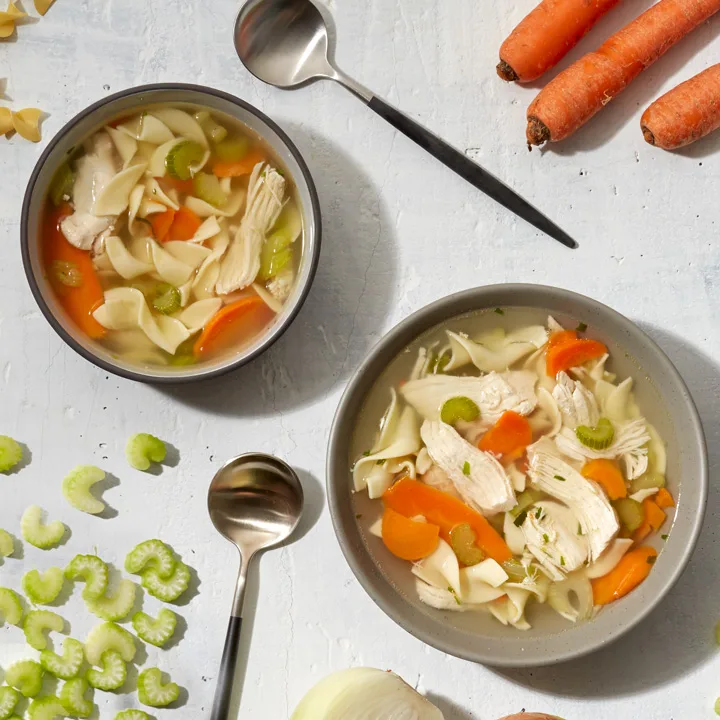
Whether you’re in a rush, battling a cold, or simply in need of a warm embrace, it’s hard to beat a tasty, nutritious, ad comforting bowl of chicken soup.
GET THE RECIPE >